
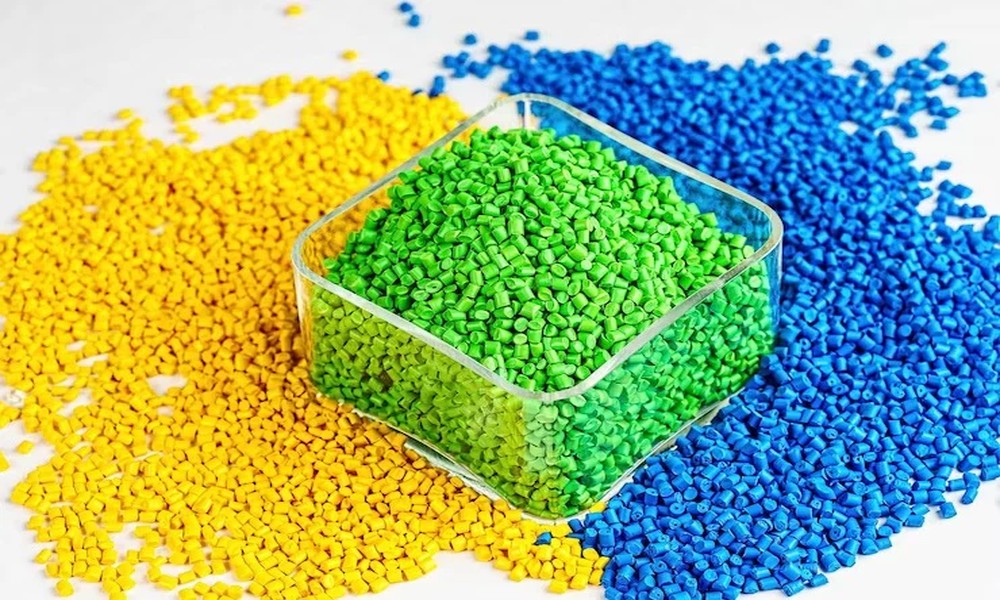
With the world manufacturing industry moving towards the circular economy, High-Density Polyethylene has been the center of attention. Being a material with an enormous strength-to-density ratio, hdpe is one of the main pillars of industrial production nowadays. The discussion is however shifting no longer how we construct it, but how we re-use it. Precisely, the question that is being posed by engineers around Australia is can recycled pellets of this polymer be the main material of large-scale additive manufacturing?
The emergence of HDPE in industrial 3D Printing.
Small-scale prototyping was the only use of additive manufacturing or 3D printing. Massive robot arms are now being used to print entire boat hulls, outdoor furniture and structural elements of civil engineering.
These large scale projects are best suited by HDPE because it has impact resistance and weatherability. This plastic has a very high level of durability which is an important benefit in the harsh Australian climate with extreme levels of UV exposure as well as temperature changes.
Breaking Technical challenges using Recycled HDPE.
The shift in virgin resin to recycled resin is not that easy. The recycled plastics had problems with thermal memory and shrinkage in the past. Recent achievements in extrusion technology, however, enable printers to achieve more stable temperatures, which means that recycled hdpe does not lose its ability to structure. With the improved process of collection and sorting, manufacturers are now able to make high quality pellets that perform even better than the virgin materials in tensile strength.
Australian Market and Sustainability.
To Australian companies, recycled feedstock is a necessary trend both in terms of environmental protection and cost reduction. By using recycled pellets, the dependency on imported raw materials will be minimized, as well as the carbon footprint of plastic manufacturing. With many industries now embracing printing on large scales as a way of minimising wastage, recycled polymers are proving that sustainability does not necessarily imply a trade-off in performance.
Summary
To sum up, recycled plastic products have a great potential of becoming the gold standard of large scale additive manufacturing. The industry is in a direction towards waste being a resource by enhancing recycling methods with the inherent toughness of the material. With the local manufacturing trend constantly progressing, this versatile polymer will surely stay in the limelight of the technology revolution and offer a solid, economical, and environmentally friendly option in the next generation of the Australian infrastructure.