
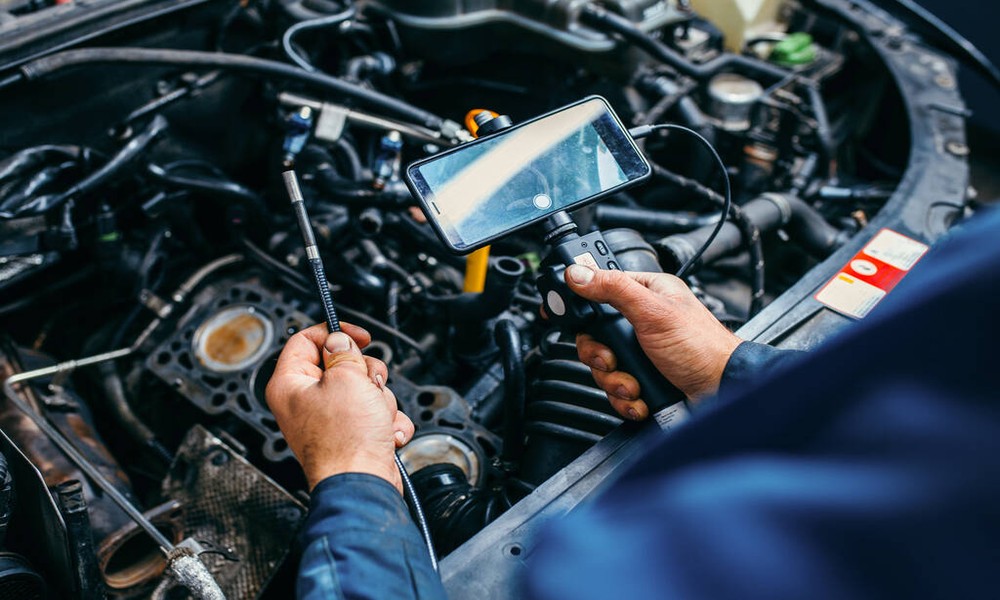
Borescope inspection is a non-destructive examination method used to visually inspect hard-to-reach or enclosed areas without the need for disassembly. Widely used across industries such as aerospace, power generation, oil and gas, manufacturing, and automotive maintenance, borescope inspections provide valuable insight into the internal condition of machinery, components, and structures. By allowing technicians to identify wear, damage, or defects early, borescope inspections help improve reliability, safety, and operational efficiency.
What Is a Borescope Inspection?
A borescope is a special optical tool that has a camera and light source, which is used to reach enclosed areas via small holes. Up-to-date borescopes have been characterized by flexible / rigidity of insertion tube, high definition cameras, adjustable LED lighting, and digital display. Most advanced systems also have articulation controls enabling the camera tip to bend and rotate giving a 360 degree view of internal surfaces. The ability to capture images and record videos is also used in improving the accuracy of diagnosis and reporting.
Borescope inspection allows looking inside parts of the internal parts like turbine blades, engine and cylinders, piping systems, heat exchangers, structure cavities. This approach saves much time on inspection and operational interference since it does not require a dismantling of equipment.
Applications Across Industries
The use of borescope inspection is necessary in industries where the integrity of internal components has a direct effect on the performance and safety. Borescopes are widely applied in power generation plants to check the gas turbines, steam turbines, boilers and compressors against erosion, corrosion, cracking, deposits or even foreign object damage. These systems facilitate early detection thus preventing forced outages and expensive repairs.
Borescope inspection is used in oil and gas industry to assist in assessing pipelines, pressure vessels, valves and downhole equipment. These are the inspections that detect internal corrosion, scaling, or blockages which may affect the integrity of system. Borescope inspection is very critical in aerospace and aviation in determination of aircraft engines. Technicians periodically check combustion chambers, turbine blades and bearings to ascertain that they are in safety and airworthiness configurations without necessarily removing the engine.
Borescope inspections are also applicable to automotive, marine and heavy equipment maintenance. Borescopes are used by mechanics to inspect cylinders, fuel injectors, gearboxes, and hydraulic systems and are accurate to diagnose using a borescope without necessarily tearing any part of the engine apart.
Key Benefits of Borescope Inspection
Borescope inspection has one of the greatest benefits that it is non-destructive. Through disassembly, organizations waste less time, less labor will be spent, and possible complications will be lower when reassembling new problems. There will be minimal downtime on the equipment and this means the operations will continue with minimal interruption.
Another significant advantage is the early defect detection. The detection of cracks, pitting, deposits, misalignment, overheating damages, and material fatigue can be detected at an early phase by using borescope. The proactive approach to solving these problems can prevent disastrous failures, unexpected closures, and accidents.
Maintenance decision also is enhanced through borescope inspection. In a plain sight, engineers and maintenance staffs would be able to tell which parts can be left in service, might need to be repaired or they might even need to be replaced. The images and videos taken will record a good maintenance history that will aid in trend analysis, audit and legal compliance. Read this article for reference.
Role in Preventive and Predictive Maintenance
Borescopes inspections are very critical in preventive and predictive maintenance practices. Regular checks assist in setting the baseline levels and monitoring the changes within a period of time. This will enable those who maintain machinery to know when their machines are going to fail and schedule their maintenance processes to be more efficient.
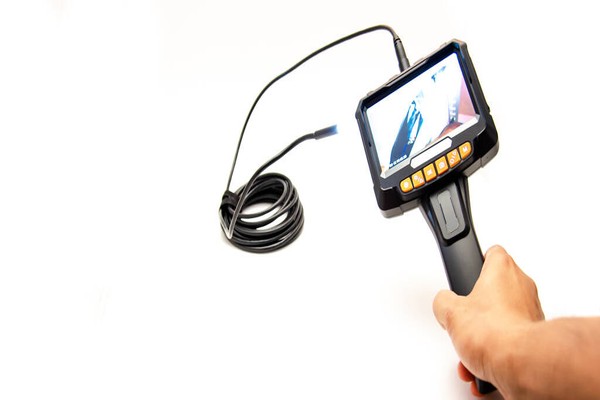
Borescope inspection can be used to support predictive maintenance to reduce emergency repair and enhance asset reliability. Organizations can no longer afford to rely on operating hours or reactive repairs to schedule maintenance of their equipment, but rather use the actual equipment condition to schedule maintenance and thereby save costs and increase component life.
Safety, Accuracy, and Compliance
Safety wise, borescope inspection gives an advantage to the technicians since they do not have to work in a narrow or dangerous area. Reduced disassembly reduces risks of heavy lifting, exposure to hot parts or exposure to hazardous materials. In controlled industries, inspection documentation aids the achievement of safety standards, quality programs and industry regulations.
Conclusion
The usage of borescopes inspection is a potent and essential tool of the current maintenance and inspection programs. It is efficient, cost-effective and very accurate because of its capability to offer internal visibility without disassembly, which is in-depth and detailed. Borescope inspection aids organizations to enhance equipment reliability, lower maintenance, and minimize downtime and keep critical assets safe by assisting in early defect identification, preventive maintenance, and safer inspection methods. A part of the modern diagnostics and maintenance planning, the borescope inspection still remains a key element of efficient and safe approaches that an industry can offer.