
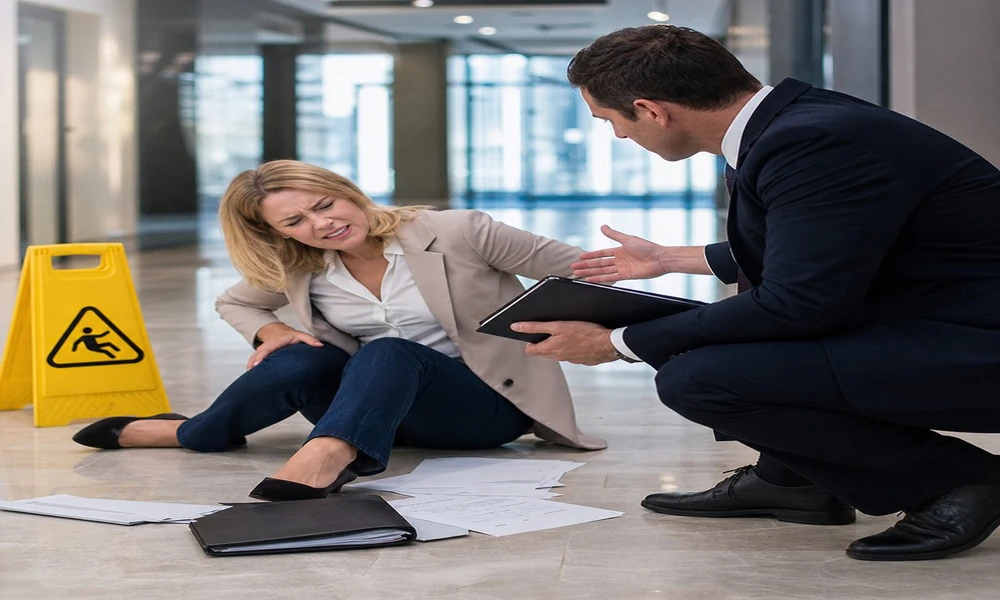
Joliet Slip-and-Fall Lawyers: Understanding What Happens in the First 48 Hours After a Fall From an Ice Patch
A person walks across a grocery store parking lot in Joliet one moment, only to find his or her feet sliding across an ice patch the next. During the early morning, there may have been snow and ice, but as the sun comes out and the air heats up in the afternoon, the ice melts and the parking lot is just a normal gray expanse again. This can make it challenging to prove the cause of the accident if no action has been taken to preserve evidence.
In many instances, the first 48 hours after an accident involving an ice patch are crucial. While seeking medical attention should always come first – you can read more at https://www.nia.nih.gov/health, there are a few things that can be done to preserve vital pieces of information that would otherwise evaporate with the ice.
Take Photos of the Ice Before It Melts
If possible, photograph the scene both up close and from a distance. Capture the ice patch, snow piles, drains, gutters, cracks, curbs, road markings, potholes, street lights, and overall visibility. While the close-up shot will show the ice patch itself, the photo taken from further away may show the ice patch’s proximity to a building’s entryway, sidewalk, or parking spot.
Photographing an icy parking lot after a fall
Try to take photos from multiple angles. If it is unsafe to do so, ask a bystander to take the shots for you. It may also be worthwhile to return to the scene at a later date, but this should not be relied upon to capture what happened.
Some details to look for:
• Tracks made by feet or tires moving over the ice
• Evidence of de-icing agents such as salt or sand, or no evidence at all
• Water coming from melting snow
• Traffic cones or warning signs
• Your footwear and clothing during the fall
Keep Your Shoes and Record the Incident Details
Don’t discard your footwear, nor should you wear the shoes you had on during the accident. Put them away in a dry location and do not try to clean them in any way. These may become important later if there are questions regarding the shoes’ quality, damage, or anything stuck to the sole that might have caused a fall.
It is also advisable to write down the details of the incident while you still remember them. Record the date and time, the precise location of the fall, the direction in which you were walking at the time, the weather conditions, and any relevant information leading up to and following the incident. The details may seem unimportant in the immediate aftermath, but they can be more difficult to remember once you start seeing doctors, filling prescriptions, scheduling follow-up visits, and talking with insurance adjusters.
Try to Get Witness Names and File an Incident Report
A witness may have seen the accident happen or know of the ice patch prior to the accident, or they might have overheard people complaining about the state of the parking lot. Ask these people for their contact information; don’t rely on the property manager to collect it.
Also, notify the store manager, apartment office, or other responsible party of the incident as soon as possible. Request a copy of the incident report, but be sure not to speculate on what happened or downplay your injuries. Some injuries, such as stiff joints and swelling, may take time to manifest.
Document Information You Can’t Obtain on Your Own
A surveillance camera’s video feed could be erased within a short period of time. Maintenance reports, salting schedules, maintenance logs, maintenance contracts, and previous complaints will likely be maintained by the property manager or another business. Weather reports may also be useful in determining whether temperatures rose above freezing or dropped below freezing, as you can see on this site, during the time of the incident.
Reviewing surveillance footage and maintenance records after an icy parking-lot accident
This information can be key in proving whether melted snow re-froze, how long the ice patch was present, and whether reasonable maintenance inspections were performed. Sending a preservation letter as soon as possible could prevent the deletion of a critical piece of evidence.
Consult With a Slip-and-Fall Lawyer in Joliet, IL
When you’ve sustained an injury that requires you to miss work or receive extensive medical care, or if there’s some dispute as to the cause of the accident, you may want to consult with an experienced slip and fall attorney in Joliet, IL. Getting legal counsel early in the process can be particularly helpful when certain evidence remains in someone else’s possession.
Don’t agree to a recorded interview with an insurance company without knowing the purpose of the phone call. Save all receipts related to medical care, doctor’s visits, lost wages, insurance claims, and correspondence related to the claim.
Save What the Scene Cannot Recall for You
Conditions like frozen and thawed surfaces rarely stay static for too long. Photos of the scene, preserved footwear, a list of witnesses, medical bills and records, and a filed incident report can all be helpful in reconstructing an accurate version of events after the ice has melted. Acting quickly during the first two days after an accident can help ensure that the changing conditions of a day in Joliet don’t alter the story.