
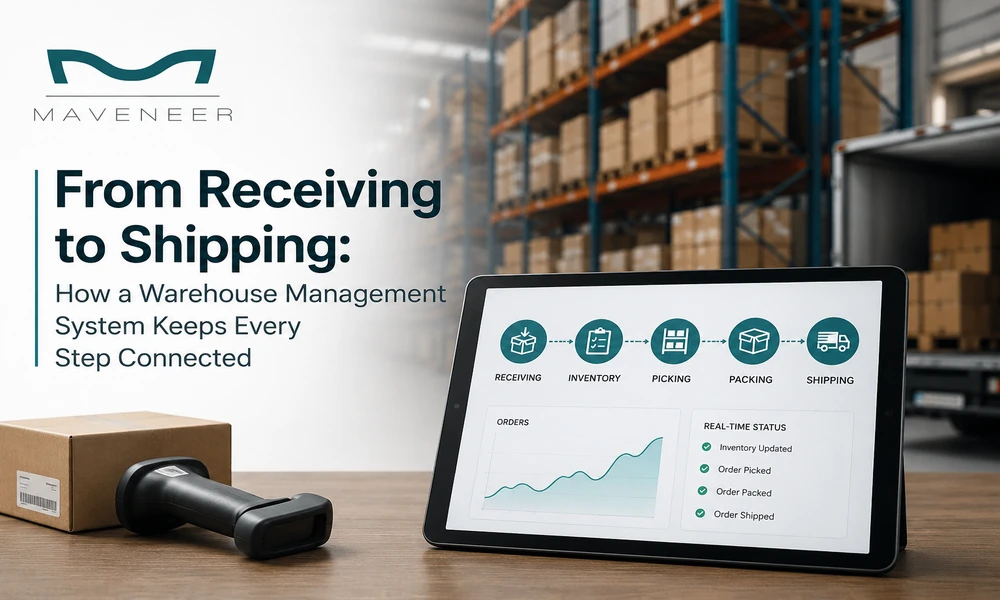
A warehouse is constantly moving. Sometimes items come in from suppliers, products are put on the shelves, customer orders are retrieved, packed, and shipped − new stock takes the place of the old. Even one stage running late, can slow the whole process down.
This is why many companies use a warehouse management system. Instead of treating each task as an independent entity, the system links every step in a single structured process. It allows warehouse teams to move faster and avoid confusion and costly errors.
It All Begins When the Stock-Is on Your Doorstep
At the receiving dock each delivery needs to be checked, counted, and put away in the right location.
Your warehouse management system logs incoming products at the time of their arrival. They know where each product should go, which makes it easier to find later on when a customer places an order.
Without such organization, incorrectly positioned products could misuse time and cause shipment delays.
Making Picking More Efficient
As order volumes increase, the need for quickly finding products becomes more critical. Employees need to prepare orders not walk the aisles of a warehouse.
Traditional systems have simply created an efficient picking route that guides staff towards the next storage location. That minimizes the needless walking and greater dispatch an order faster.
These incremental time savings cumulatively allow you to be more productive in the warehouse.
Keeping Inventory Reliable
False positives when reconciliating digital records with physical operations is one of the most frustrating parts of warehouse operations.
A reliable warehouse management system syncs inventory data automatically with every instance material enters, is transferred to a different location, or departs from the warehouse. Managers have accurate inventory information without conducting nonstop manual counts.
Visibility provided through this reduces chances of overselling products and out-of-stock popular stock.
Helping Teams Work Together
The Warehouse is not a single function. Stock levels are monitored by purchasing teams, order status is checked by customer service and managers review performance reports.
With a connected system, this ensures that everyone is looking at the same information, which helps to eliminate misunderstandings and communicate better throughout the business.
While there are many benefits here is a list of some of the most valuable ones:
Unified data means faster and more dependable decisions as everyone from every team works with the same data.
Supporting Long-Term Growth
With business growth, it is only natural that operations in warehouses become more complicated. Spreadsheets simply cannot manage the additional coordination required for new product lines, increased order volumes, and more storage locations.
The scalable warehouse management system scales with the business to regulate processes without drastically modifying your current work procedures. Analyzed operational data provides managers with information on trends and performance, enabling better decision making.
The Insiders of an Effective Warehouse
Good moving out of warehouses is more about organization than just speed faster than your competitor. Each product must be quick to find, each order − run easily through the steps and each stock adjustment − take place on time. An effective warehouse management system helps achieve these aims through the unification of receiving, storage, picking, packing, and shipping into a single seamless operation. All of which makes for a warehouse that performs better today and is prepared for tomorrow’s growth.