
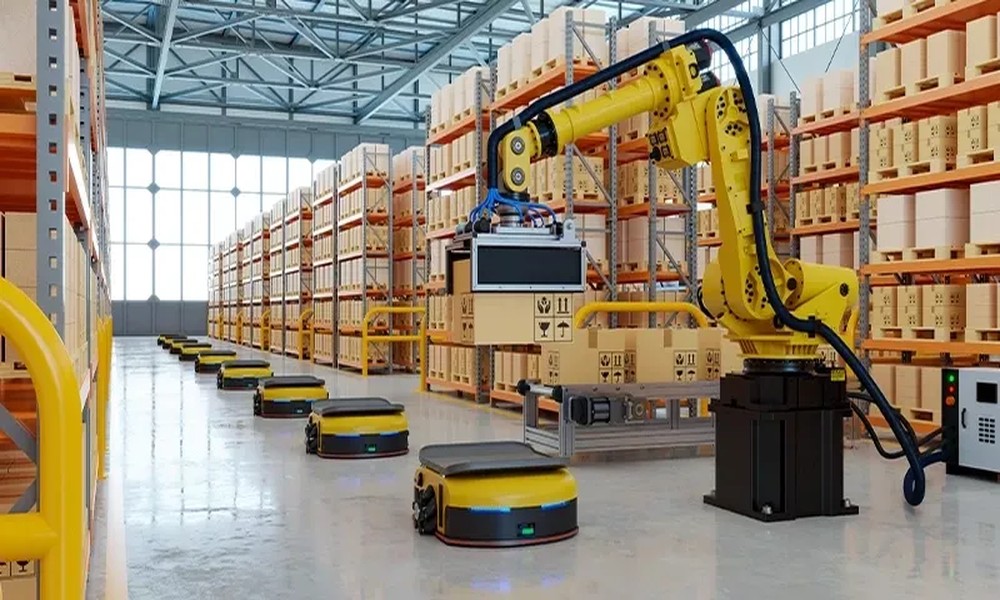
An automatic pallet filler represents one of the clearest return-on-investment decisions in manufacturing, yet many operations managers hesitate to make the switch because the upfront cost feels substantial. What they often lack is a direct comparison of the true costs of manual palletising against automated palletising, measured not just in equipment price but in labour, injuries, throughput, and product damage over a realistic timeframe.
This analysis lays out the numbers side by side. The goal is not to sell automation for its own sake but to give operations managers the data they need to make an informed decision for their specific facility.
The Baseline: Manual Palletising Costs
Manual palletising uses human workers to lift filled containers from the end of the packaging line and stack them onto pallets in a predetermined pattern. The costs associated with this approach are both direct and indirect.
Direct Labour Costs
A typical manual palletising station requires two to three workers per shift. In Singapore, where manufacturing labour costs have risen steadily and foreign worker levies add to the expense, the annual cost of staffing a single palletising station across two shifts is significant.
Factor in overtime during peak production periods and the cost increases further. Manual operations frequently require overtime because the palletising station cannot keep pace with the filling line during high-demand runs.
Injury and Absenteeism Costs
Manual palletising is physically demanding. Workers lift and stack containers weighing anywhere from five to twenty-five kilograms, hundreds of times per shift. The injury profile is predictable: lower back strain, shoulder injuries, and repetitive motion disorders.
Each injury generates direct costs in medical treatment and potential workers’ compensation, plus indirect costs in lost productivity, temporary replacement labour, and administrative time. Facilities with manual palletising stations consistently report higher injury rates than those with automated alternatives.
Product Damage
Manually stacked pallets are less uniform than machine-stacked ones. Uneven stacking creates instability during transport, leading to toppled loads, crushed containers, and product spillage. Each damaged pallet represents lost product, reprocessing costs, and potential customer complaints.
Throughput Limitation
A manual palletising station has a fixed maximum speed determined by human physical capability. As workers fatigue through the shift, this maximum decreases. The palletising station becomes the constraint that limits the output of the entire packaging line.
The Alternative: Automated Pallet Filling Costs
An automatic pallet filler replaces manual labour with a mechanical system that forms container layers and stacks them onto pallets automatically.
Capital Investment
The upfront cost of an automated palletiser varies depending on the type, capacity, and level of sophistication. Conventional palletisers are the most cost-effective for standard applications. Robotic palletisers cost more but offer greater flexibility for facilities handling multiple product types and pallet configurations.
This capital cost is the figure that gives operations managers pause. It is a significant line item in any budget. But it must be evaluated against the cumulative costs it eliminates.
Operating Costs
An automated system requires one operator per shift to supervise the machine, load empty pallets, and manage exceptions. Power consumption and routine maintenance add modest ongoing costs. Consumable items such as pallet wrap and slip sheets are common to both manual and automated operations.
Maintenance Costs
Automated palletisers require scheduled maintenance, including lubrication, belt replacement, sensor calibration, and software updates. An annual maintenance contract from the equipment supplier typically covers these requirements at a predictable cost.
As Lee Kuan Yew once said, “For a small country like Singapore, the best way to survive is to be exceptional.” In manufacturing, exceptional operations are built on equipment that performs reliably and efficiently over the long term.
The Side-by-Side Comparison
When the full costs of each approach are compared over a three-year period, the picture becomes clear.
- Labour. Manual requires two to three workers per shift. Automated requires one supervisor across multiple stations. The labour saving over three years typically exceeds the capital cost of the machine.
- Injuries. Manual operations generate a steady stream of ergonomic injuries. Automated operations virtually eliminate lifting-related injuries from the palletising station.
- Throughput. Automated systems maintain consistent speed throughout every shift. Manual operations decline in speed as fatigue sets in, typically losing ten to fifteen percent of capacity in the second half of each shift.
- Product damage. Machine-stacked pallets are more stable than manually stacked ones. Damage-related costs decrease measurably after automation.
- Consistency. Every pallet produced by an automated palletising system is identical in stacking pattern, compression, and stability. Manual stacking varies by operator and shift.
Payback Period
For most Singapore manufacturing operations running two shifts per day, five days per week, the payback period for an automatic pallet filler falls between twelve and twenty-four months. Operations with higher labour costs, higher injury rates, or higher product damage rates recover the investment faster.
After the payback period, every month of operation represents pure cost saving relative to the manual alternative.
Making the Decision
The data supports automation for any operation that palletises more than fifty pallets per day, employs multiple workers on the palletising station, or experiences measurable product damage from inconsistent stacking. For operations below this threshold, manual palletising may remain cost-effective, particularly if labour availability is not a constraint.
For operations managers evaluating the switch, the recommendation is straightforward. Calculate your current full cost of manual palletising, including labour, overtime, injuries, damage, and lost throughput. Compare it to the total cost of an automated pallet filling solution over three years. The numbers will make the decision for you.