
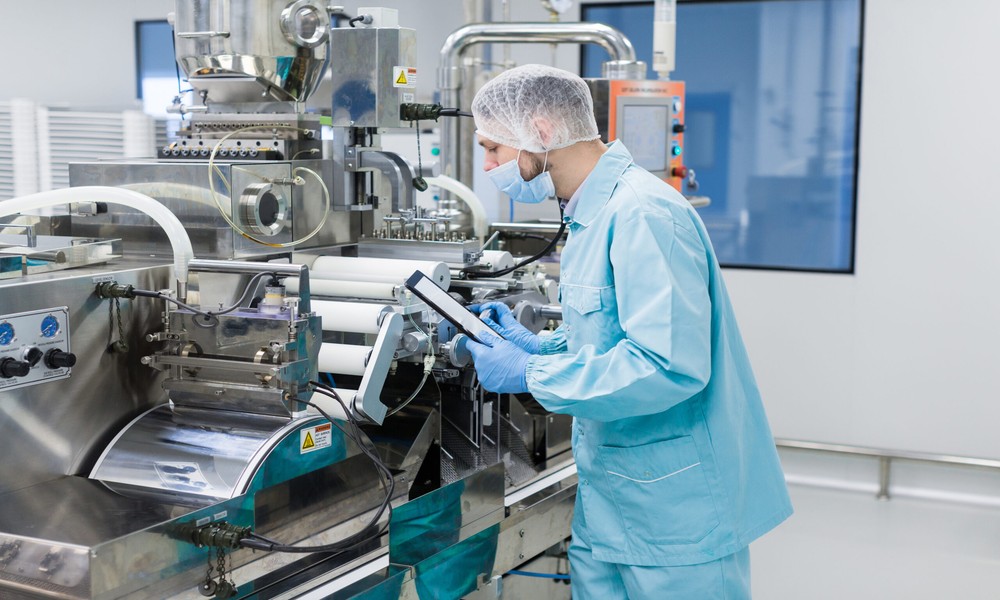
Companies that depend on OEM contract manufacturing medical devices gain a decisive advantage: they can bring regulated products to market faster while maintaining strict quality controls at every stage. The medical device sector demands precision, compliance and consistency, and outsourcing production to a specialised partner allows OEMs to focus on design and commercialisation rather than building factory infrastructure from scratch.
Why OEMs Outsource Device Production
Original equipment manufacturers in the medical field face a unique set of pressures. Regulatory bodies such as the FDA and the European Medicines Agency hold device makers to exacting standards, and a single production error can trigger recalls, patient harm or reputational damage. Building an in-house manufacturing line capable of meeting ISO 13485 requirements, installing cleanroom environments and training qualified staff requires years of capital investment.
The Role of Qualified Partners
Contract manufacturers absorb that burden. A qualified partner already holds the certifications, operates validated processes and employs technicians who understand Good Manufacturing Practice protocols. For OEMs entering new therapeutic areas or scaling existing product lines, outsourcing production de-risks the entire programme.
The global medical device market is projected to exceed USD 600 billion by 2028, and much of that growth will flow through contract manufacturing partners who can handle volume ramps without sacrificing traceability or documentation rigour.
Selecting the Right Manufacturing Partner
Choosing a contract manufacturer is a strategic decision. OEMs should evaluate prospective partners on five criteria:
- Regulatory track record
- Material expertise
- Production capacity
- Geographic proximity to end markets
- Willingness to invest in process improvements
Singapore as a Manufacturing Hub
Singapore has become a preferred hub for medical device contract manufacturing. The city-state offers political stability, a highly educated workforce, strong intellectual property protections and proximity to fast-growing healthcare markets across Southeast Asia, China and India.
As Mr Heng Swee Keat, Deputy Prime Minister of Singapore, observed, “Advanced manufacturing is a pillar of Singapore’s economic future, and our precision engineering sector continues to attract global partners seeking quality and reliability.”
AMT, a Singapore-based precision manufacturer, serves OEMs across orthopaedics, endoscopy, dental and diagnostic segments, offering metal injection moulding, ceramic injection moulding, additive manufacturing and cleanroom assembly under one roof.
Quality Systems That Underpin Reliable Output
Reliable production begins with robust quality management. Any manufacturer handling medical devices must operate under ISO 13485, the international standard that governs design controls, risk management, purchasing controls, process validation and corrective action procedures.
Regulatory Compliance Architecture
Beyond ISO 13485, many OEMs require their contract partners to maintain FDA registration, comply with the European Medical Device Regulation and hold facility-specific certifications for cleanroom operations. These overlapping requirements create a compliance architecture that minimises defects and protects patients.
AMT maintains ISO 13485 certification and FDA registration, enabling the company to manufacture components and assemblies destined for regulated markets in the United States, Europe and Asia-Pacific. The company’s quality team conducts incoming material inspections, in-process monitoring and final release testing on every production lot.
Document control is another pillar. Every device history record, deviation report and change order must be traceable back to specific raw material batches and operator actions. Digital quality management systems have replaced paper-based filing in leading contract facilities, reducing retrieval times and audit preparation effort.
Processes That Drive Precision
Medical devices range from simple single-use instruments to complex electromechanical assemblies. A capable contract manufacturer must command multiple production technologies.
Core Manufacturing Technologies
- Metal injection moulding produces small, geometrically complex components such as surgical jaws, orthodontic brackets and endoscopic tips, combining design freedom with wrought metal properties in stainless steel, titanium and cobalt-chrome alloys
- Ceramic injection moulding serves applications where biocompatibility, electrical insulation or wear resistance matters, with zirconia and alumina components finding use in dental implant systems and diagnostic sensor housings
- Additive manufacturing enables rapid prototyping and low-volume production of patient-specific guides, jigs and fixture tooling through selective laser melting and binder jetting
Cleanroom assembly ties these upstream processes together. Class 7 and Class 8 cleanrooms provide the controlled environments needed for final assembly, packaging and labelling of sterile devices. Gowning protocols, air filtration systems and environmental monitoring ensure particulate counts remain within validated limits.
Scaling Production Without Sacrificing Quality
One of the hardest transitions in medical device manufacturing is moving from pilot runs to full-scale production. Processes that work at fifty units per week may behave differently at five thousand. Tooling wears, raw material lots vary and operator fatigue introduces variability.
Experienced contract manufacturers anticipate these challenges. They conduct process validation studies, including Installation Qualification, Operational Qualification and Performance Qualification, before releasing a production line for commercial output. Statistical process control charts track critical dimensions and flag drift before parts move out of specification.
Building a Long-Term Partnership
The strongest OEM and contract manufacturer relationships resemble partnerships rather than vendor arrangements. Joint design reviews, shared cost-reduction targets and transparent communication about yield rates build the trust needed to sustain multi-year programmes.
Regular business reviews give both parties a forum to discuss upcoming product launches, engineering changes and capacity forecasts. When problems arise, a mature partner conducts root cause analysis, implements corrective actions and shares findings openly.
For OEMs seeking a proven partner in Asia, AMT offers the breadth of process capability, regulatory credentials and engineering depth needed to support reliable medical device production across the full product lifecycle. Choosing the right provider for OEM contract manufacturing medical devices remains one of the most consequential decisions a device company will make.