
A commercial defendant moves to dismiss in Supreme Court, New York County. The motion is granted. The plaintiff files a notice of appeal, and the matter goes to the First Department in Manhattan. Across the East River, an identical motion is granted in Supreme Court, Kings County. The plaintiff files a notice of appeal, and the matter goes to the Second Department in Brooklyn. The substantive law is the same, the procedural framework is now largely unified under 22 NYCRR Part 1250, and yet the two appeals will not necessarily produce the same outcome. The team at Warner & Scheuerman, which handles civil appeals in all four New York Appellate Division departments as part of the firm’s litigation practice, treats the choice of trial-court venue as having appellate consequences from the day the case is filed. Sophisticated commercial litigants who understand the department-level differences make better decisions about where to litigate and how to position issues for review.
The four departments share a single appellate framework. They do not produce identical bodies of law.
How New York’s Appellate Geography Actually Works
New York divides civil and criminal appeals from Supreme Court and most other trial courts among four Appellate Division departments organized geographically.
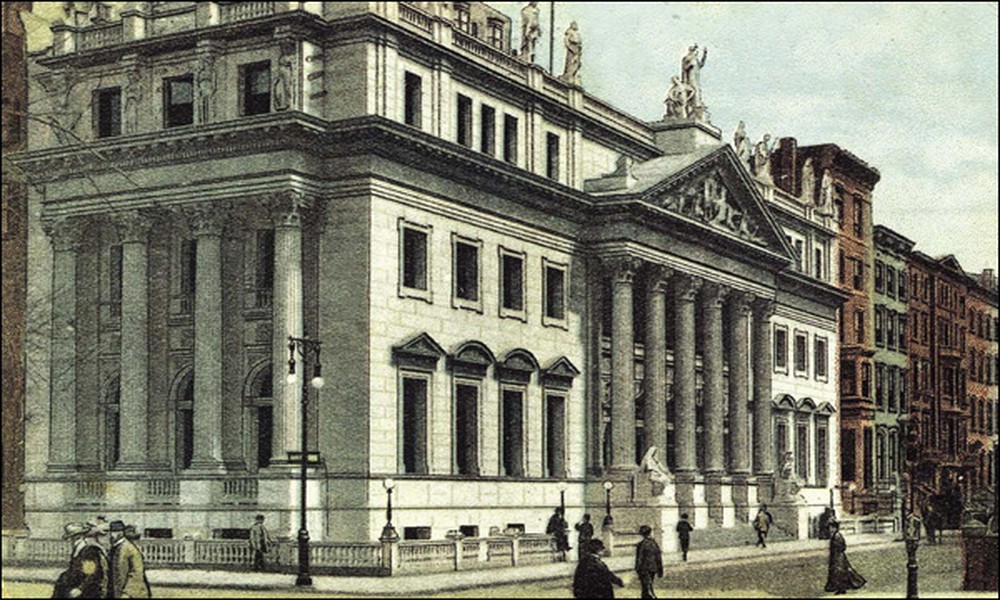
The First Department covers New York County (Manhattan) and Bronx County. Its caseload reflects the substantive composition of those counties: heavy on commercial litigation, complex financial disputes, professional malpractice, real estate, and the broader portfolio of matters that flow through the New York County Commercial Division. The court sits in Manhattan and retains a term calendar system that structures its briefing and argument schedule in a way the other departments do not.
The Second Department covers Brooklyn, Queens, Staten Island, and seven suburban counties: Nassau, Suffolk, Westchester, Rockland, Putnam, Dutchess, and Orange. It is by far the largest department by volume, hearing the majority of New York’s civil appellate caseload. The composition is heavy on personal injury, real estate, matrimonial, and consumer matters, with substantial commercial volume from Westchester, Nassau, and Suffolk Supreme Courts. The court sits in Brooklyn and operates with the efficiency demanded by its caseload.
The Third Department covers the Capital Region and 27 other upstate counties extending into the eastern Adirondacks and the Catskills. Beyond its Supreme Court appeals, the Third Department also has exclusive jurisdiction over administrative appeals from the Workers’ Compensation Board, the Unemployment Insurance Appeal Board, and most other state agencies, and it hears appeals from the Court of Claims (the court for actions against the state). The administrative-law and government-defendant caseload gives the Third Department a distinct jurisprudential character.
The Fourth Department covers Western New York: Buffalo, Rochester, Syracuse, and 22 surrounding counties. The caseload mix resembles the Second Department’s at smaller scale, and the court has retained certain procedural distinctions that survived the 2018 unification of statewide rules.
The Procedural Framework Under 22 NYCRR Part 1250 and the Local Supplements
The Practice Rules of the Appellate Division at 22 NYCRR Part 1250, effective September 17, 2018, unified the procedural framework that previously varied substantially among the four departments. Briefing requirements, perfection deadlines, motion practice, and digital filing now run on a single statewide standard.
Part 1250 is supplemented by department-specific local rules. The First Department supplements at 22 NYCRR Part 600. The Second Department supplements at Part 670. The Third Department supplements at Part 850. The Fourth Department supplements at Part 1000. Where the local rules conflict with Part 1250, the local rules control within that department.
The standardized provisions that matter most in commercial appeals include the 30-day notice of appeal deadline under CPLR 5513 (still controlled by the CPLR rather than Part 1250), the six-month perfection deadline under 22 NYCRR 1250.9(a), the 30-day respondent’s brief window under 1250.9(c), and the 10-day reply brief window under 1250.9(d). The First Department’s term calendar modifies the response and reply timelines for matters scheduled within a particular term.
Local variations that affect commercial practice include the Fourth Department’s requirement of a complete hard copy of the record (versus the subpoena method available in the First and Second Departments), the Fourth Department’s elimination of the initial informational statement otherwise required under 1250.3(a), and the absence of a settlement or mediation program in the Fourth Department under 1000.3(b). The First Department has retained an active mediation program and a higher rate of pre-argument conferences than the volume-driven Second Department typically conducts.
These procedural differences do not change substantive law. They do change the litigation timeline, the cost structure of an appeal, and the strategic shape of the matter from notice of appeal through decision.
Caseload Composition and Why It Shapes Each Department’s Body of Law
The cases a court hears shape the cases it decides. The four departments have produced different bodies of law in part because they hear different mixes of disputes.
The First Department’s commercial caseload has produced sophisticated and often plaintiff-friendly authority on judgment-creditor remedies, voidable transactions under New York’s UVTA, piercing the corporate veil, complex contract interpretation, and contribution issues in commercial contexts. The court’s recent veil-piercing decision in Rich v. J.A. Madison, LLC (1st Dep’t 2025) reflects a willingness to relax the second-prong proof requirements that other departments have applied more strictly. The court’s decision in Bloostein v. Morrison Cohen LLP, 157 A.D.3d 120 (1st Dep’t 2018), refined the contribution bar for legal malpractice arising from purely economic loss.
The Second Department’s volume has produced the most extensive body of authority on personal injury, premises liability, foreclosure defense, residential landlord-tenant, and matrimonial issues. The court’s decisions in Dellwood Development, Ltd. v. Coffinas Law Firm, PLLC (2d Dep’t Dec. 11, 2024), on continuous representation in legal malpractice, and Janker v. Silver, Forrester & Lesser, P.C., 135 A.D.3d 908 (2d Dep’t 2016), on case-within-a-case pleading, illustrate the department’s tight pleading practice.
The Third Department’s administrative law caseload has produced the leading authority on Article 78 review, agency-decision deference, Workers’ Compensation Board determinations, and Court of Claims practice. Commercial practitioners less frequently encounter Third Department authority directly but often work with it through choice-of-law and judgment-domestication issues.
The Fourth Department has produced authority across the substantive spectrum at smaller scale, with particular depth in commercial real estate, environmental matters, and the heavy-industry tort cases that arise from the manufacturing economy of Western New York.
Where Doctrinal Differences Have Real Consequences
The departments are bound by Court of Appeals authority and try to maintain consistency on core substantive issues. The differences are usually at the margins, but the margins matter.
Pleading specificity for fraud under CPLR 3016(b) has been applied with somewhat varying strictness across departments, with the First Department’s commercial caseload tending to produce more detailed reasoning on what particularity requires in complex transactional contexts.
The continuous representation doctrine in legal malpractice, articulated by the Court of Appeals in Shumsky v. Eisenstein, 96 N.Y.2d 164 (2001), has produced different fact patterns at the Appellate Division level. The Second Department’s recent treatment in Dellwood Development applied the doctrine to a transactional-then-litigation continuity that some commercial practitioners had assumed would not qualify.
Apparent agency in medical malpractice, governed by Hill v. St. Clare’s Hospital, 67 N.Y.2d 72 (1986), has been applied with consistent doctrine across departments but varying receptivity to fact patterns at the margins.
Restraining notice and judgment-collection practice has been most fully developed in the First Department, where the volume of commercial collection matters has produced detailed authority on third-party turnover proceedings, information subpoenas, and the Aspen Industries v. Marine Midland Bank setoff framework.
Where a department-level split exists or appears to be developing, leave to the Court of Appeals under CPLR 5602 is the mechanism for resolution. Sophisticated commercial litigants identify potential splits at the trial court level and position the record for either the most favorable Appellate Division panel or the strongest Court of Appeals leave application.
How Warner & Scheuerman Approaches Department-Specific Strategy
The firm’s appellate practice runs through department-specific evaluation at multiple stages of a matter.
At the trial court level, venue and forum selection determine which department will eventually hear any appeal. Commercial plaintiffs with options about where to file (often available where the contract has multiple performance counties or the defendant maintains operations in multiple jurisdictions) can structure the matter for the appellate court whose authority is most favorable to the substantive issues likely to arise.
At the post-trial stage, the firm evaluates which arguments are positioned best for the specific department that will hear the appeal. The same argument frames differently in the First Department than the Second Department, and brief writing reflects the department’s developed authority and analytical preferences.
At the Court of Appeals stage, leave applications under CPLR 5602 succeed at higher rates when the petition identifies a genuine departmental split or a question of statewide importance. The firm’s familiarity with all four departments’ developed authority strengthens the framing of leave applications.
If you have a commercial matter that is heading toward an appeal in any of New York’s four Appellate Division departments, the choice of department, the brief structure, and the framing of issues all matter to the outcome. Reach out to Warner & Scheuerman to walk through the specific department’s procedural framework, the substantive authority developed in that department, and the strategic positioning that civil appellate practice in New York actually requires.